
FIELD NOTES #004: READING THE RHYTHM
What I Saw During DeCourcy vs. Mellon - UNF 34
Before the Opening Bell
As a filmmaker, people often ask me what I’m looking for when I film combat sports like judo, boxing, or MMA.
Most assume it’s the knockout.
The spectacular technique.
The dramatic finish.
Those moments are certainly exciting.
But by the time they happen, the story has usually been unfolding for several minutes.
It actually begins before the opening bell.
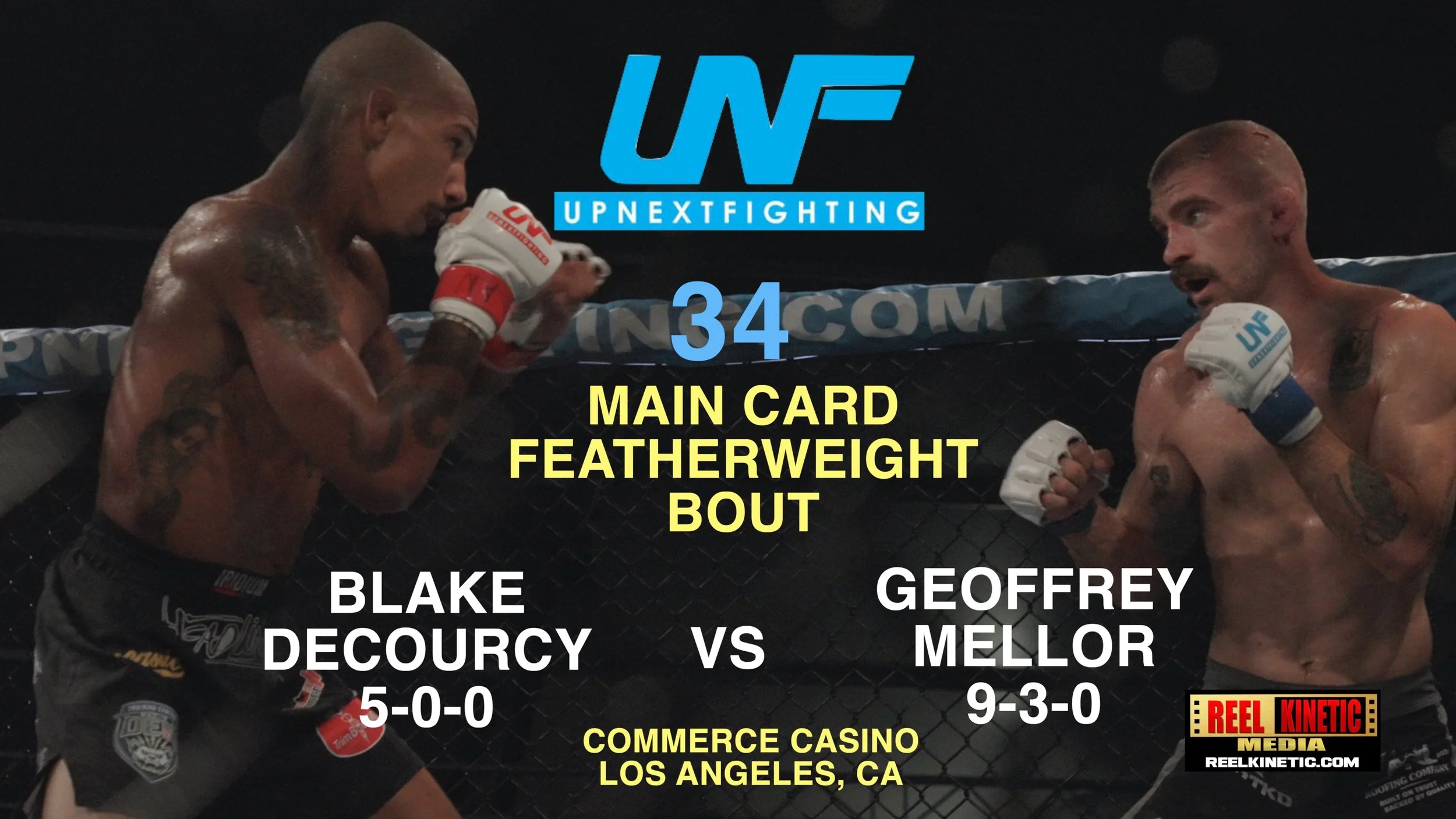
Watching Blake DeCourcy and Geoffrey Mellor prepare in their respective corners before their fight immediately caught my attention.
Mellor lightly bounced on his feet while rhythmically punching the padded corner of the cage.
Across from him, DeCourcy gently rocked from side to side, keeping himself loose and relaxed.
Neither approach was better than the other.
They were simply two different ways of preparing for the uncertainty that was about to unfold.
As a martial artist, those moments interest me because they reveal something about each person before they become consumed by competition.
The Conversation Begins
Years ago, martial arts taught me that a fight isn’t simply about punches and kicks.
It’s about reading another human being.
Free sparring isn’t just where you practice techniques.
It’s where you learn to recognize intention while disguising your own.
There is also an important difference between sparring in class and competing in a tournament.
Inside the school, you’re learning how to read an opponent, deliver a technique, receive one, and roll with its impact. It’s practice, but that doesn’t mean it’s always gentle. Once you become comfortable—and find a classmate who is equally willing—the exchanges can become faster, harder, and much more intense.
There is still an underlying familiarity between training partners. You see each other regularly. You’re responsible for helping one another improve, and even during hard sparring, a certain degree of mutual care remains.
Competition changes that relationship.
At a tournament, you may be facing someone you’ve never met. They don’t train beside you or share the same daily relationship you have with your classmates. Although respect and sportsmanship still matter, that familiarity—and some of its natural restraint—is gone.
The intensity can rise dramatically.
Now there may be a trophy, recognition, or prize money at stake. Your opponent has trained toward a goal, and for those few minutes, you are standing directly in the way of it.
They are also standing in the way of yours.
That changes the psychological temperature of the exchange. Every attack carries greater commitment. Every mistake has a greater consequence. The techniques may be the same ones practiced in class, but the intention behind them—and the pressure surrounding them—are completely different.
Every fighter is trying to manipulate the other.
A feint.
A change in rhythm.
A false opening.
A combination that convinces your opponent to expect one thing before giving them something completely different.
In martial arts, revealing your intentions before or as you attack is called telegraphing. Good fighters work tirelessly to eliminate it while trying to recognize it in someone else.
Baseball has its own version of telegraphing. It’s called tipping. A pitcher might unintentionally reveal information—perhaps through the way he grips the baseball before delivering the pitch—giving the batter an advantage before the ball ever leaves his hand.
This is where the fight becomes a conversation without words.
Every movement asks a question.
Every reaction provides an answer.
Every exchange becomes another piece of information.
Information Changes Everything
One of the biggest misconceptions about fighting is that techniques win fights.
Usually…
The setup does.
Unless a fighter is badly outclassed or hurt, you can’t expect the same punch or kick to land over and over again.
You have to create the conditions that allow it to succeed.
You’re constantly gathering information, testing reactions, adjusting your strategy, and shaping what your opponent believes is about to happen.
Meanwhile, they’re trying to do exactly the same thing to you.
Mike Tyson famously said, “Everybody has a plan until they get punched in the mouth.”
Most people understand that line because we have all been hit sometime in our lives that stopped us cold.
Every fighter walks into the ring knowing they’re going to get hit. It’s inevitable—part of the job description. They have to be physically and mentally prepared to accept it, keep thinking, keep adapting, and continue solving the problems unfolding in front of them.
They learn how to lessen the impact by rolling with a punch or kick—yielding with the force instead of meeting it with a rigid body and absorbing the full impact.
They learn how to lessen the impact by rolling with a punch or kick—yielding with the technique instead of meeting its force with a rigid body and absorbing all of it.
But every fighter also knows there are strikes you can’t soften.
Sometimes the punch lands perfectly.
Sometimes the kick connects cleanly.
They condition themselves to continue thinking through pain and fatigue without revealing how much a strike affected them.
Often, they deliberately project the opposite—smiling, nodding, or responding with a look that says, “Is that all you’ve got?”—even when the strike hurt.
It may be a bluff, but it denies the opponent valuable information. Showing pain can increase an opponent’s confidence and encourage them to press the attack even harder. Refusing to show it can begin affecting the opponent psychologically.
One of the most famous examples occurred when Muhammad Ali fought George Foreman in the Rumble in the Jungle.
Foreman had already demolished Joe Frazier and Ken Norton—two fighters who had previously defeated Ali. Most people expected Foreman to do the same to him.
Ali absorbed, deflected, and rolled with Foreman’s power while refusing to give him the reaction he expected. Foreman later recalled landing a hard shot, only to have Ali respond, “That all you got, George?”
The message was psychological as much as physical:
Your best isn’t enough.
Ali eventually exhausted Foreman, disrupted his confidence, and knocked him out in the eighth round.
The punch isn’t the test.
What happens after it is.
Can you keep thinking?
Can you keep adapting?
Can you continue solving problems when your body—and sometimes your mind—is telling you to stop?
That idea stayed with me throughout this fight.
Mellor repeatedly presented DeCourcy with different problems to solve.
Early on, Blake absorbed a clean shin kick to the head.
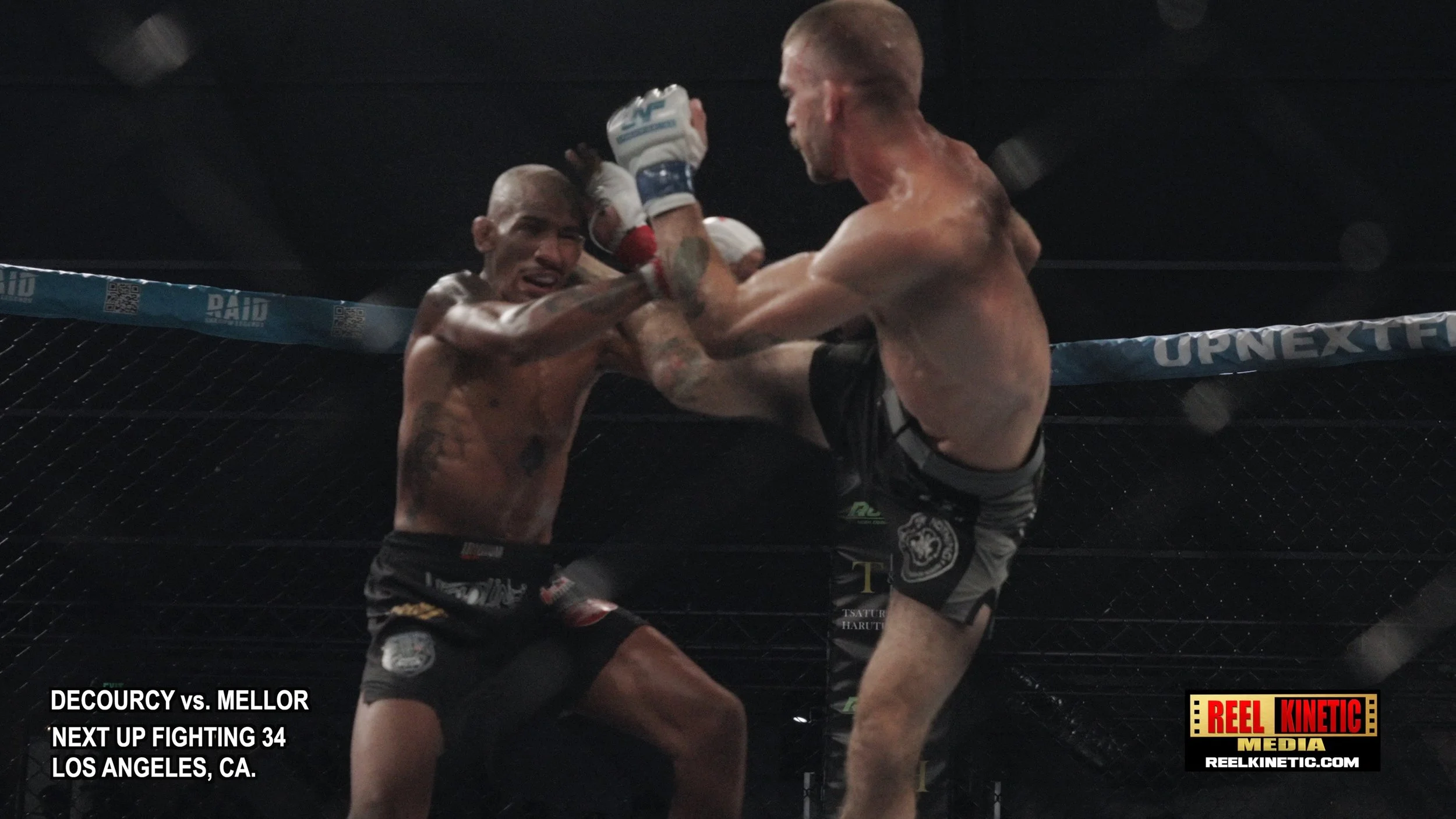
Early in the fight, Geoffrey Mellor lands a clean shin kick to Blake DeCourcy’s head—a powerful piece of information delivered through impact.
Many viewers remember the impact because of how the crowd reacted to it.
What interested me was what happened afterward.
Instead of becoming hesitant, he adapted.
Later, when Mellor threw another kick, Blake rushed forward, closed the distance, jammed the attack before it could fully develop, and turned the exchange into a takedown.
To me, that wasn’t simply a successful technique.
It was information being processed.
Adjustment.
Adaptation.
One fighter had learned something.
That lesson changed the next exchange.
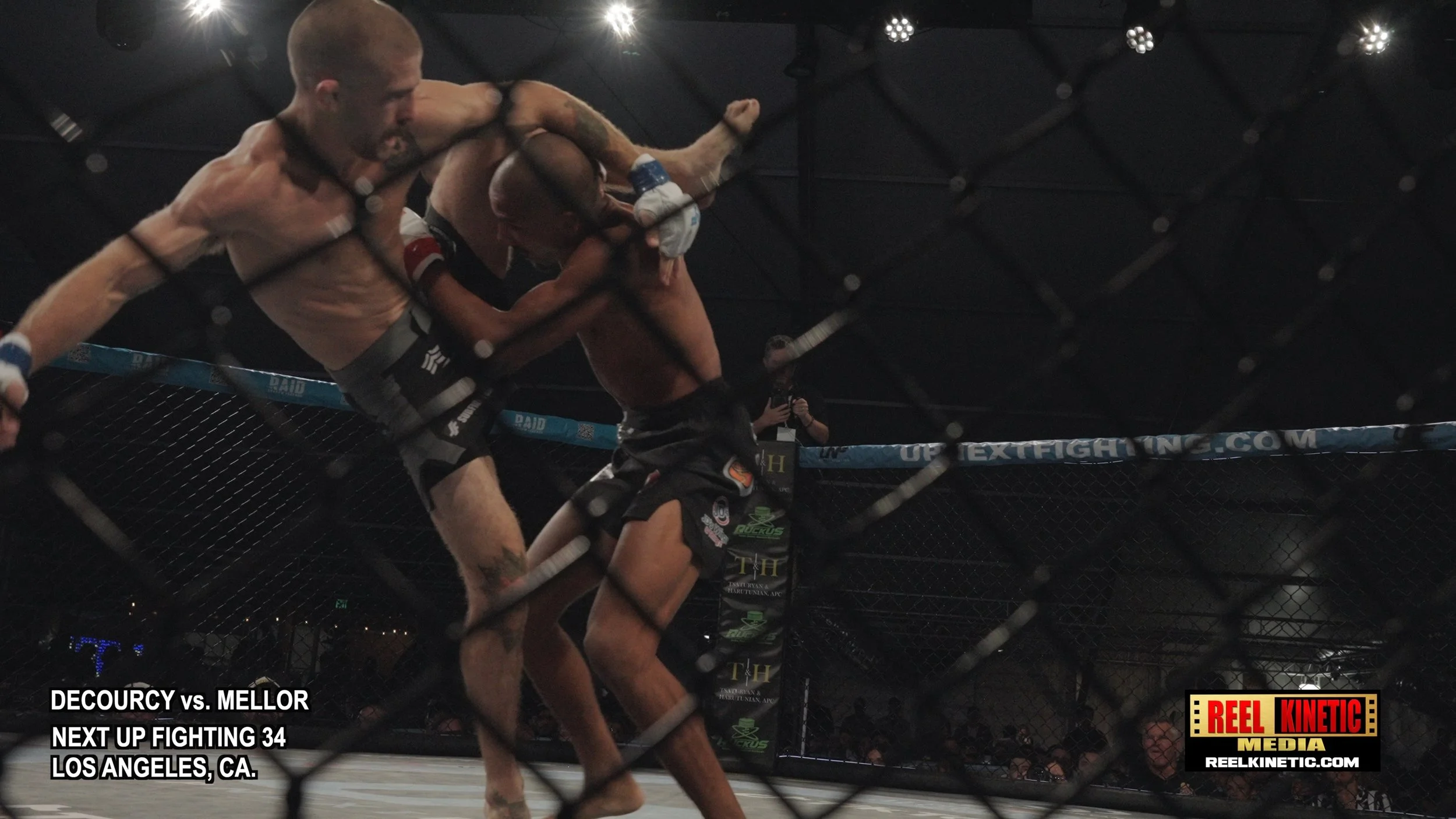
Later, DeCourcy changes the exchange. He closes the distance, jams Mellor’s kick before it can fully develop, and turns the attack into a takedown.
The technique presented the same problem. DeCourcy gave it a different answer.
Behind My Camera
Standing behind the camera, I find myself using many of the same principles martial arts taught me.
The difference is that no one is trying to hit me.
As a competitor, I had to survive the deception.
As a filmmaker, I get to observe it.
But I don’t experience the fight only as an observer.
I deeply feel its rhythm and cadence—the jockeying for position, the testing of distance, the pauses, the sudden accelerations, and the subtle struggle over who will control the tempo—the ultimate seizing of the opponent’s centerline without having to pay the price for it.
It’s difficult to describe because much of it arrives as a feeling. I sense when the energy between the fighters changes, sometimes before I can consciously explain why.
In those moments, my martial arts experience and my years as a Stunt Coordinator, 2nd Unit Director, Graphic Artist, and Storyteller are no longer operating separately. They merge into one response.
That response is the cumulative result of my life’s journey.
For much of my life, I thought of these as separate pursuits. Looking back, I can see that each one was part of the same search—finding a way to express how I experience movement, emotion, conflict, and story.
Live-action sports filmmaking is where those paths finally converge. It gives me a way to respond instinctively to something real and translate what I’m feeling into images.
The competitor in me feels the intention.
The Stunt Coordinator recognizes how the action is developing, how it serves the story, and what it reveals about character.
The storyteller in me watches each competitor’s strategy and how successfully they can apply it against an unwilling opponent who is simultaneously trying to impose a strategy of their own.
It’s a visual narrative of clashing theories unfolding in real time.
The graphic artist reads the perspective and color relationships within the frame, understanding how they affect the viewer and how the color palette can be further shaped in post.
The filmmaker brings creative instinct and technical craft together, using angle, lens, movement, and composition to express the mood and impact of the moment—and translate what I’m feeling into something the audience can experience.
I’m not simply watching the rhythm of the fight.
I’m trying to move with it—to feel the moment, find the best way for the camera to capture it, and give the audience a chance to experience something close to what I felt when it happened.
Instead of asking only, “Will I capture the punch?”
I’m asking different questions.
Where should I position myself?
Should I isolate the emotion with a longer focal length?
Should I reveal the tactical geometry with a wider frame?
Should I lower the camera so the techniques feel larger, more dynamic, and more imposing?
Every decision changes how the audience experiences the fight.
Those instincts come from decades of studying martial arts cinema and learning how camera angles, lenses, movement, and framing can make action feel more immediate, powerful, and emotionally engaging.
I bring a lifetime of experience as a Stunt Coordinator, 2nd Unit Director, Martial Artist, graphic artist, and storyteller to my live-action sports filmmaking.
I love what I do, but I also know there is still so much for me to learn.
Every sport challenges me to see differently. Every fight tests my instincts. Every edit reveals another lesson I can carry into the next project.
That is what excites me: the learning process never ends. New equipment and filmmaking technology are entering the industry faster than ever, continually expanding the ways we can capture and tell a story.
The tools will keep changing.
The challenge—and the opportunity—is learning how to use them with intention.
If my heart races as I look through the monitor, chances are the audience will feel it too.
That is my barometer.
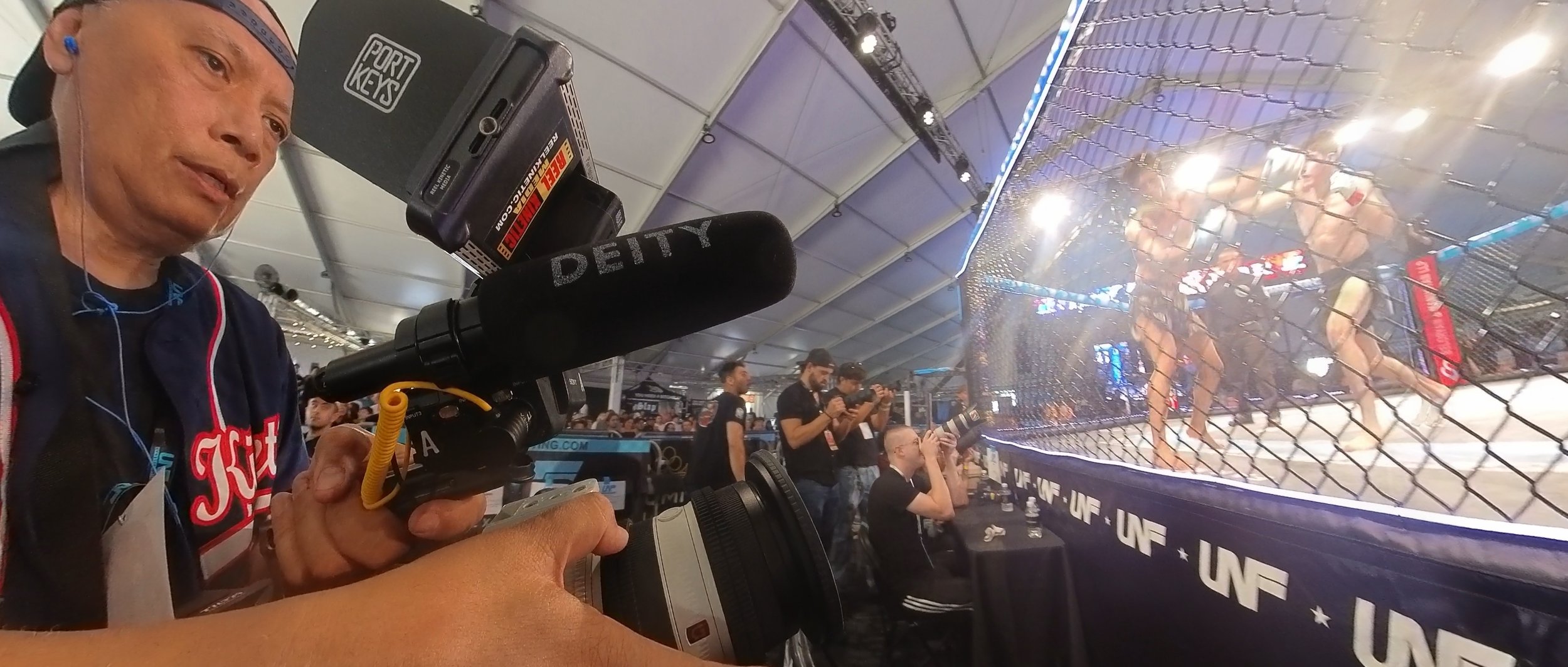
An Insta360 view from cageside at UNF 34 as I film the knockout ending the bout before DeCourcy vs. Mellor.
There are no rehearsals, resets, or second takes in live combat sports. The camera can’t sense when the rhythm is changing. The person behind it has to.
The Mental Game
On a movie set, everyone knows what’s about to happen.
The actors know.
The stunt performers know.
The director knows.
The camera crew knows.
In live competition, no one knows.
Not even me.
I don’t know when the rhythm is about to change.
I don’t know when one fighter is about to solve the puzzle standing in front of them.
I don’t know when years of preparation and sacrifice are about to culminate in a single exchange.
That means I have to remain mentally present throughout the fight.
Just like the athletes, I have to pace myself.
You can’t maintain peak concentration indefinitely. Attention naturally rises and falls.
The challenge is knowing when I can briefly reset my mind—and when I need to be completely locked in because the story could change in the next second.
If I lose my edge for even a moment, I may miss the exchange that defines the entire fight.
FINDING THE STORY IN THE EDIT
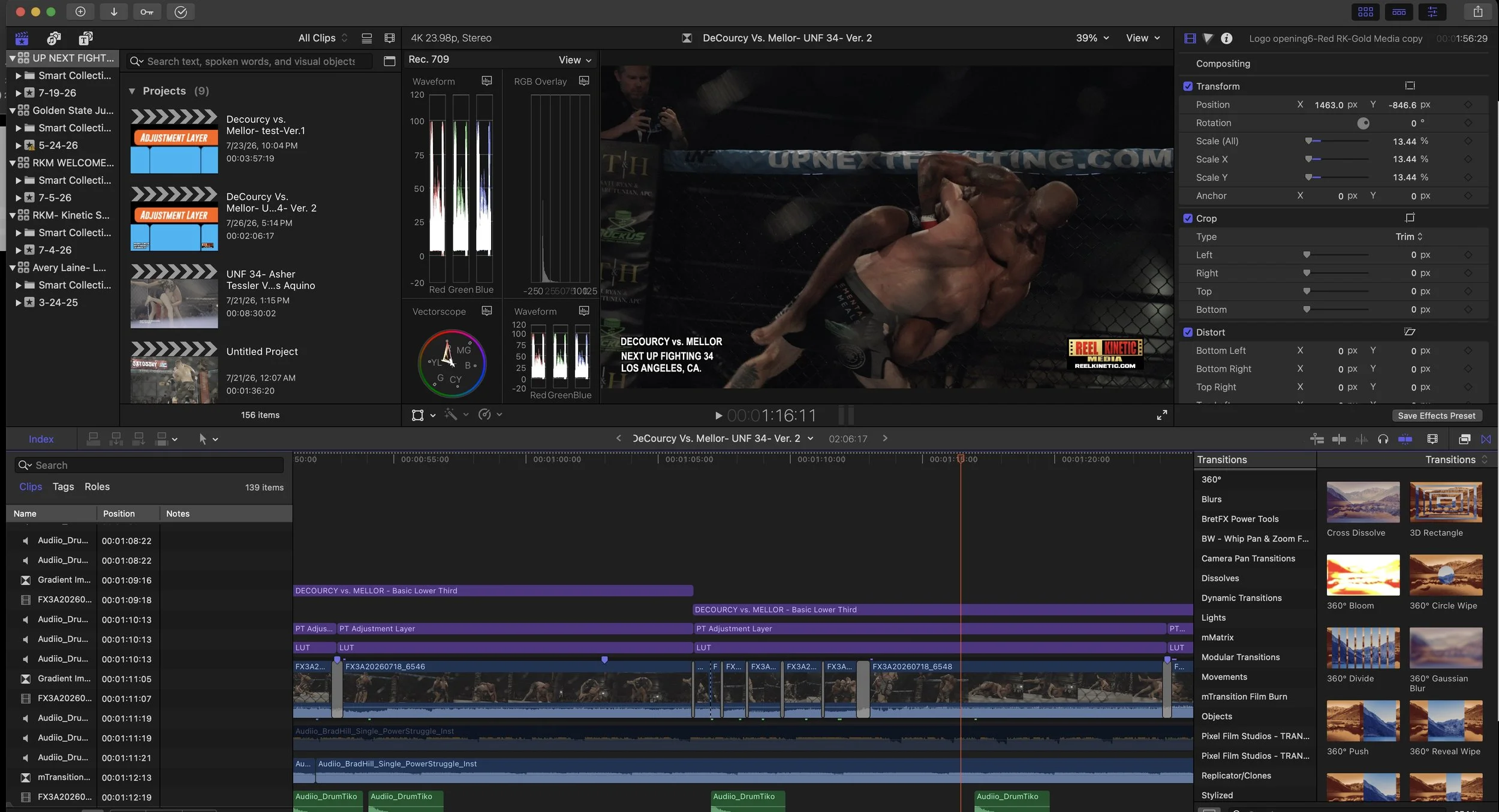
The fight happens only once. Inside the Final Cut Pro timeline, I refine the story I discovered cageside—shaping rhythm, color, sound, and emphasis so the audience can feel something close to what I felt in the moment.
Behind the camera, I’m discovering the story and its characters as everything unfolds in real time.
I don’t know the complete narrative yet. I’m watching the fighters reveal it through their choices, reactions, adjustments, and the way they handle pressure.
Editing is where I refine what I discovered.
Much of what I understand about editing action and controlling its pace came from watching the late Yuen Cheung-yan work.
I was the Stunt Coordinator on an LA Times commercial I worked on with him, and I had the opportunity to watch as he edited the previsualization for its fight sequence.
He taught me how to set up an action, hold on a moment long enough for the emotion to register, and escalate the action with purpose.
In post, I remove long pauses, repetition, and moments that don’t support the central theme or move the story forward. I decide which images need more time, which exchanges belong together, and when the audience needs to see an action—or the reaction it caused.
I can reframe or move closer within an image to direct attention toward a detail that might otherwise be overlooked. I can add music to accentuate the rhythm and emotional impact of a moment.
Those choices don’t change what happened.
They help the audience recognize what I saw and felt while it was happening.
Mellor bouncing in his corner and DeCourcy rocking from side to side establish two different rhythms before the fight begins.
The head kick becomes more than an isolated impact when it is connected to DeCourcy’s later decision to rush forward, jam another kick, and turn the exchange into a takedown.
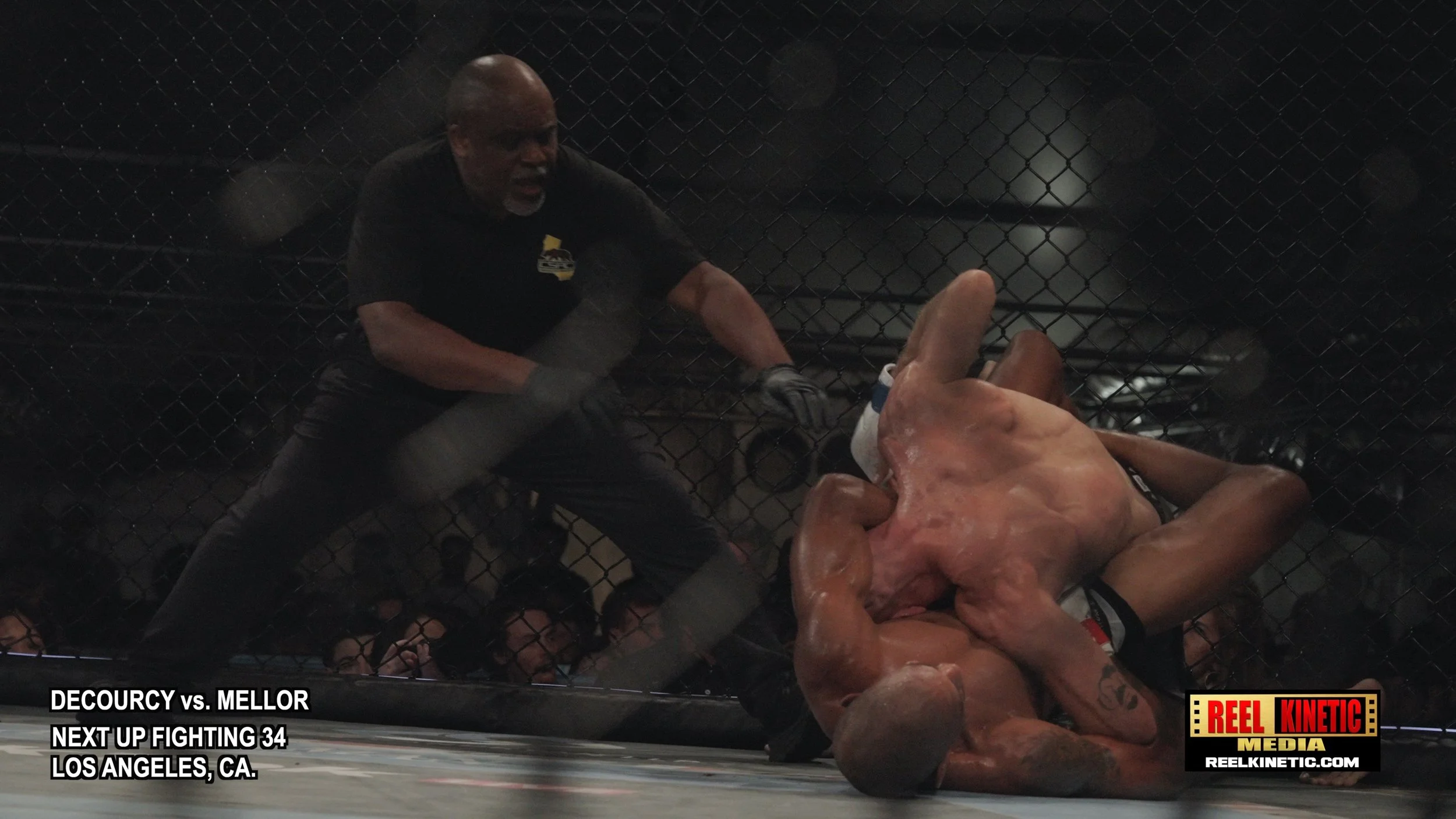
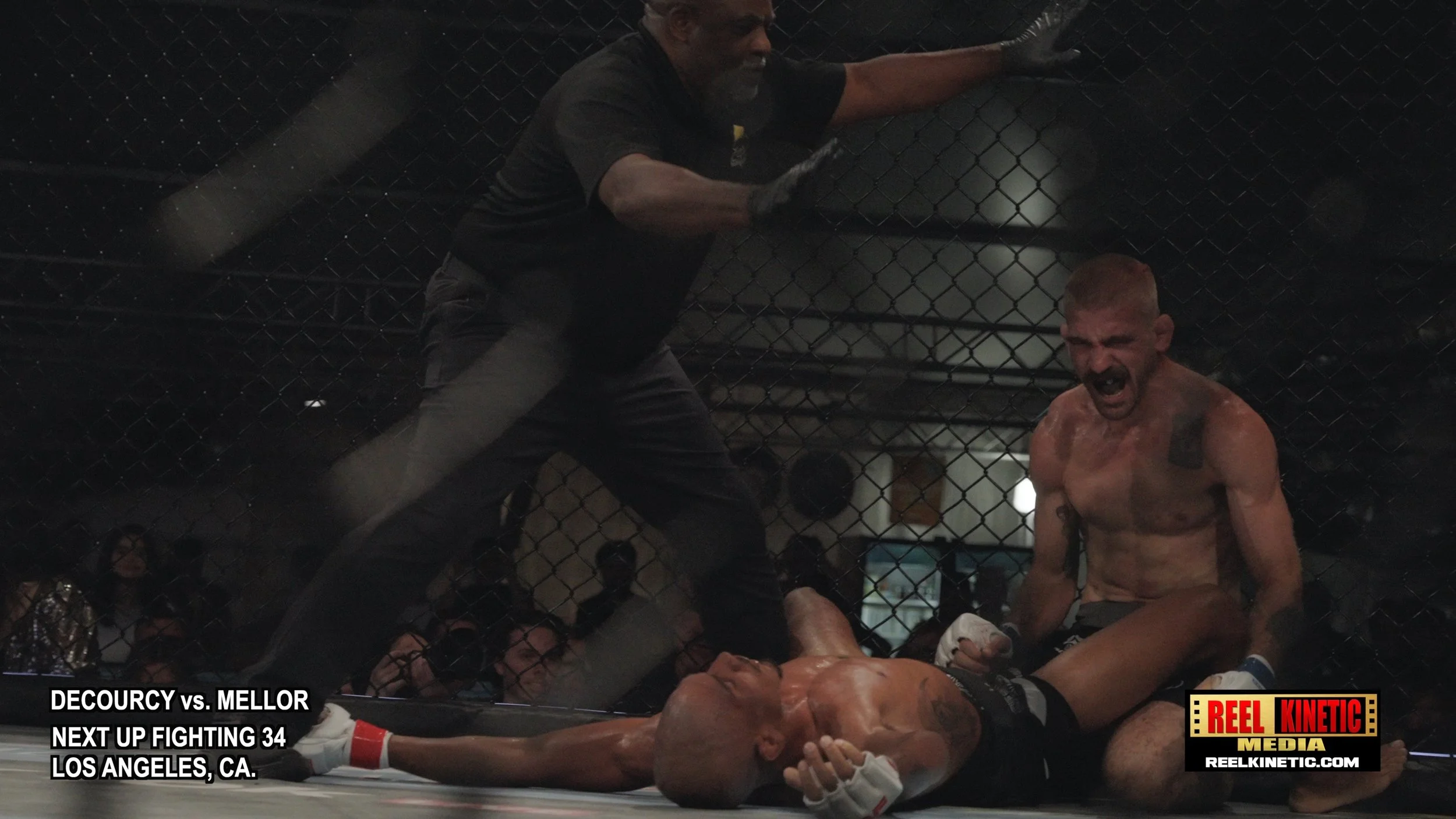
The submission tells us how the contest ended. Remaining with the fighters afterward reveals what it demanded from them.
The fight provides the events.
The edit reveals their meaning.
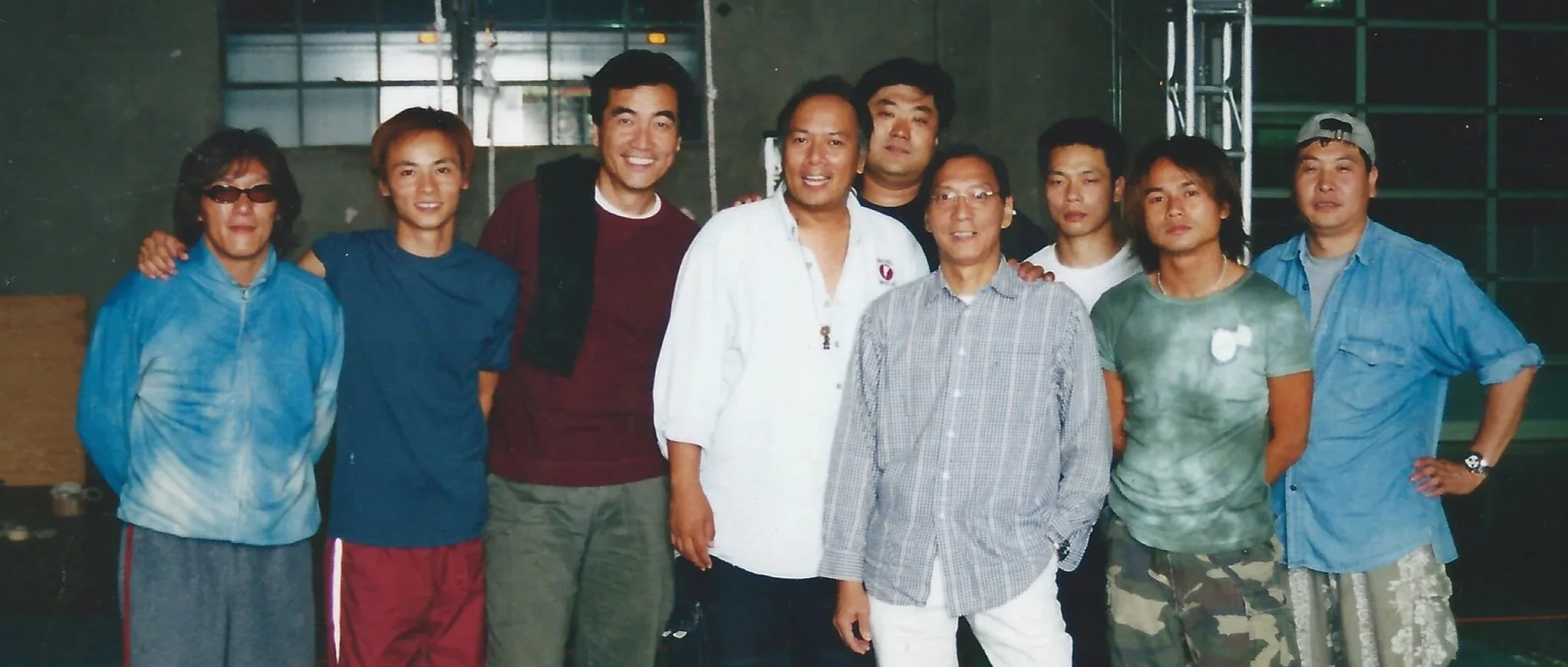
Me (center), with the late Yuen Cheung-yan beside me (w/hand in pocket) and members of the Hong Kong stunt team during production of an LA Times theatrical commercial spotlighting Master Yuen’s wire-action work.
I served as Stunt Coordinator on the commercial, which was narrated by Ben Affleck. Master Yuen had also trained Affleck for “Daredevil.”
After the Fight
The ending stayed with me the most.
Not because of how it ended...
...but because of how they reacted after it ended.
I've seen winners leap onto the top of the cage, pound their chest, and celebrate with an explosion of emotion.
This wasn't that kind of fight.
This felt like a war.
When Geoffrey Mellor tapped in the third round and the referee stepped in to separate the two fighters, the contest was over.
What stayed with me wasn't simply the submission.
It was the silence that followed.
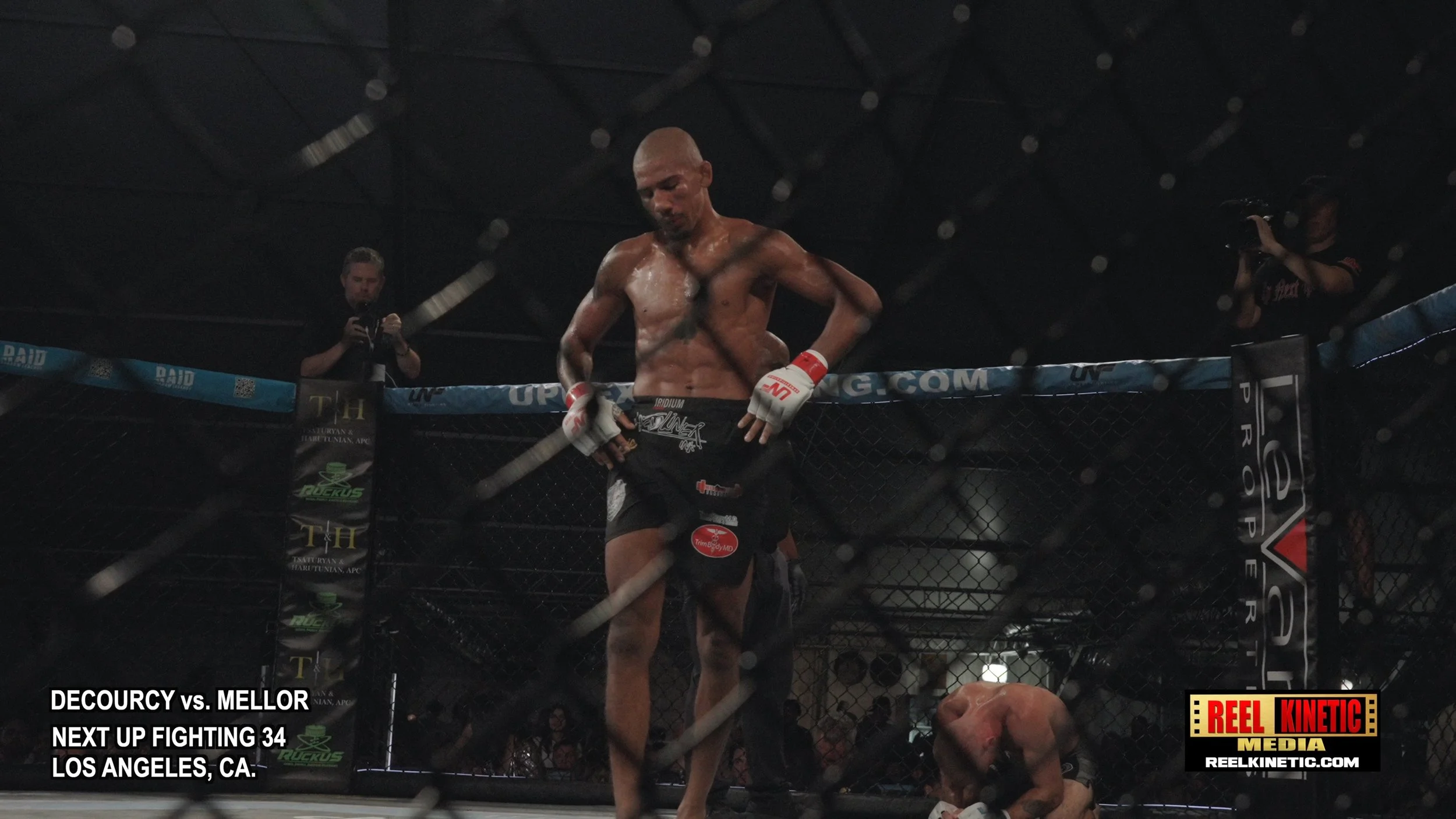
Both men looked as though they had emptied themselves completely.
Mentally.
Physically.
Emotionally.
The techniques still mattered.
The strategy still mattered.
But somewhere during the fight...
it became something else.
A test of will.
A test of determination.
A test of who could continue solving problems while exhausted, absorbing punishing blows, and expending enormous amounts of energy grappling with another human being.
I wasn't watching victory.
I was watching consequence.
The submission ended the contest.
The expressions on both fighters' faces revealed what the contest had demanded from them.
Sometimes that's the most honest moment in all of sports.
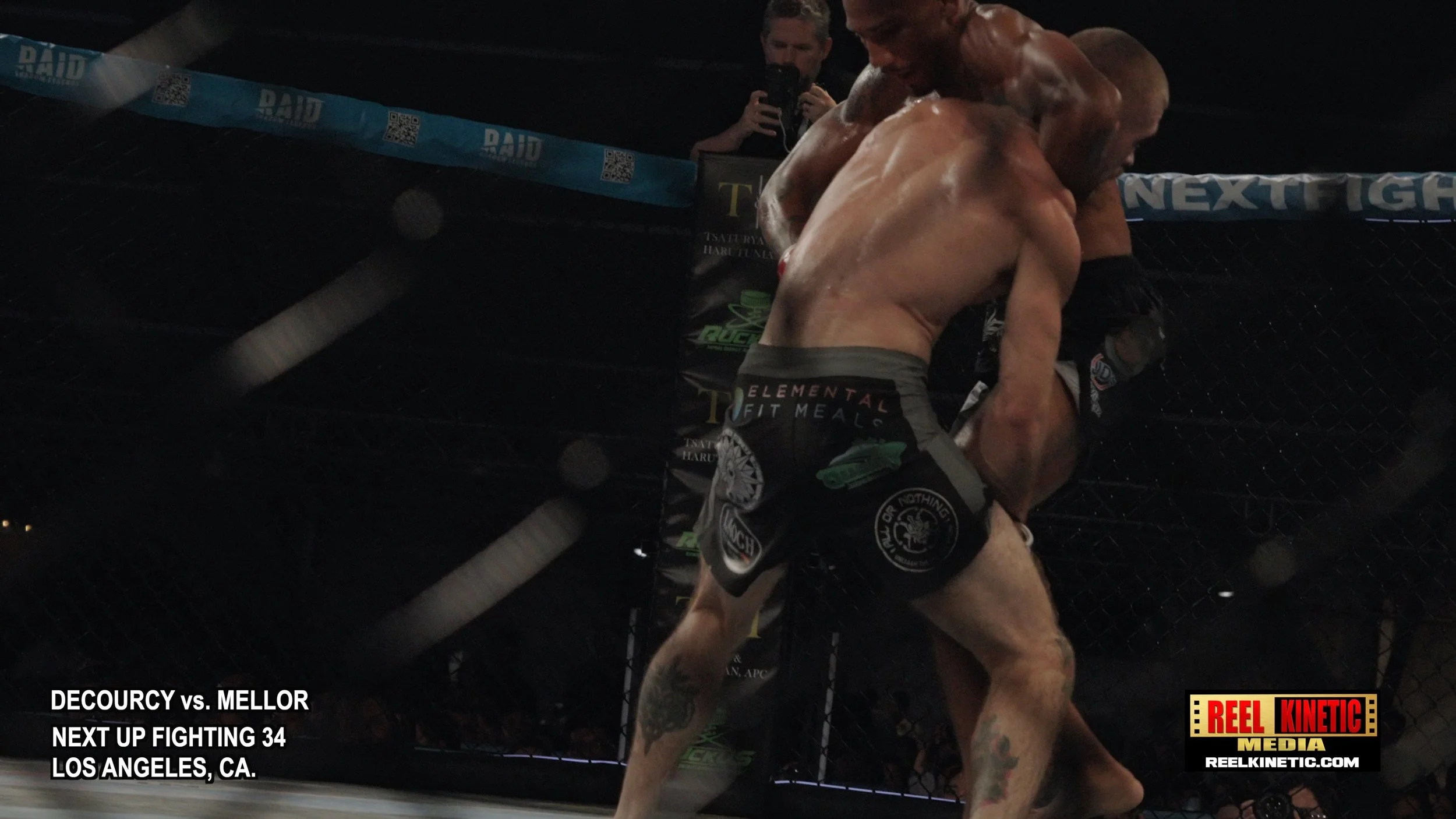
The Final Sequence
These four frames capture the closing movement of the fight—from the struggle for control to the submission, the referee’s intervention, and the moments immediately afterward.
Seen together, they reveal more than the result. They show pressure becoming opportunity, opportunity becoming consequence, and two exhausted fighters processing what the contest demanded from them.
The submission ended the fight.
What followed revealed its cost.
I'd like to thank Up Next Fighting and Kris Buckner for trusting me with the opportunity to document this event and for welcoming me into your world to tell one of its stories.
Thank you also to Blake DeCourcy and Geoffrey Mellor.
Your willingness to step into the cage, test yourselves, adapt under pressure, and leave everything inside it is what made this story worth telling.
I’m grateful I was there to witness it—and trusted to tell it through my camera.
Moments like these are why I created Reel Kinetic Media.
Reel Kinetic Media creates cinematic short films from unscripted moments in sports.
WATCH THE FILM
DeCourcy vs. Mellor — A Cinematic MMA Short Film in 4K | UNF 38
CLICK IMAGE BELOW TO PLAY