
FIELD NOTES #005: Why We’re Becoming Reel Kinetic Films
The thinking behind our change from Reel Kinetic Media.
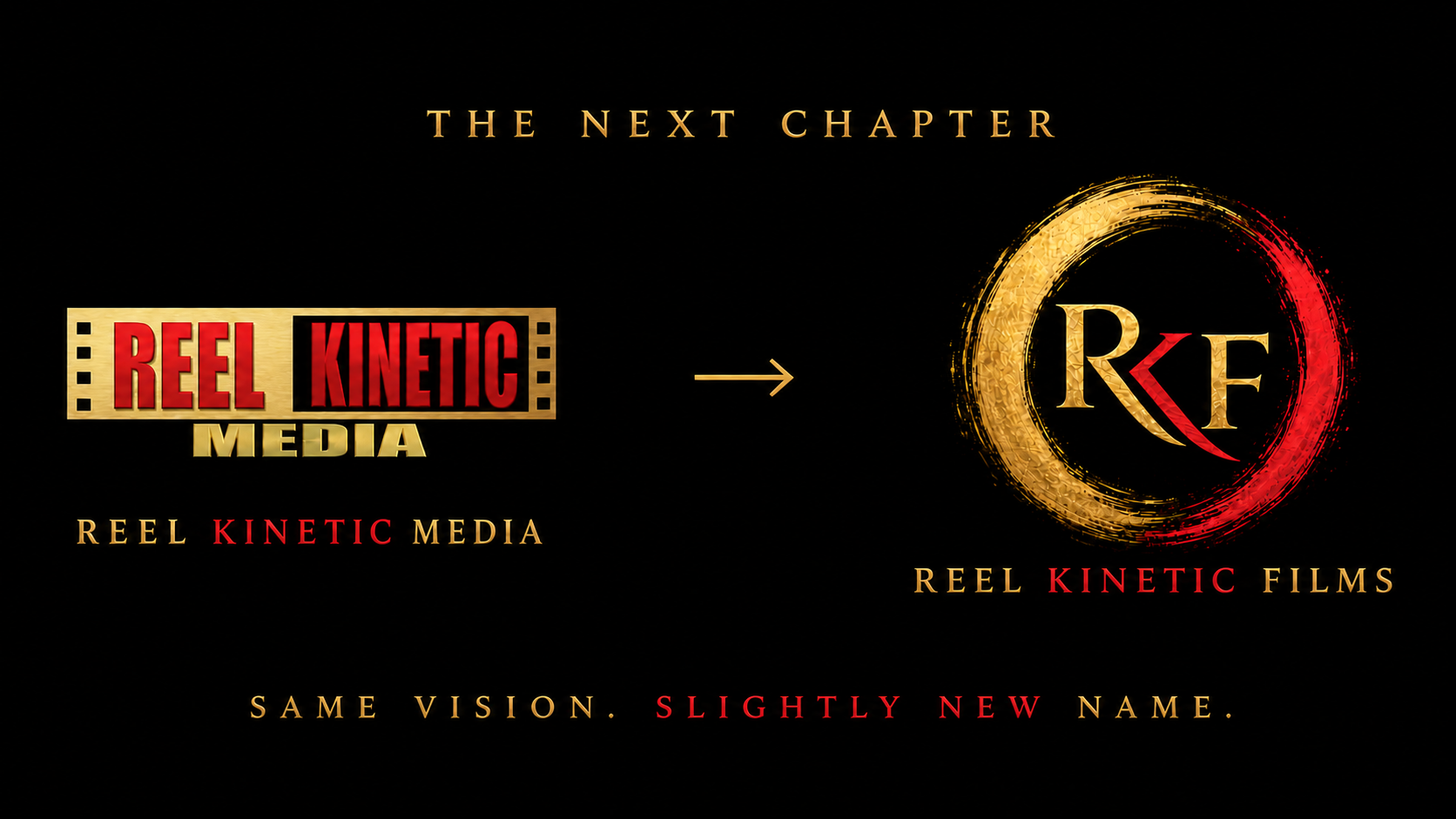
We’re changing our name from Reel Kinetic Media to Reel Kinetic Films because we want our name to say more clearly what we bring to the work.
We should probably clear one thing up: we shoot digitally. We’re not Christopher Nolan or Quentin Tarantino, so don’t expect us to squeeze a giant IMAX film camera into your locker room. You have enough equipment in there already.
“Films” reflects our approach to storytelling. Digital tools give us the mobility, flexibility, and quick turnaround our work requires, while our filmmaking background guides what we do with them.
The traditions of Hollywood and Hong Kong helped shape how we understand movement, composition, rhythm, and emotion. Those influences come with us when we walk into an arena, follow an athlete, or sit down with someone for an interview.
For years, “Media” gave us room to do different kinds of projects. But it didn’t say much about how we approached them. As we talked about where we wanted the company to go, that distinction became harder to ignore.
Recording what happened is part of our job. Finding the story takes more: understanding what the moment means, recognizing whose experience can help an audience connect with it, and making choices about how to bring that experience to the screen.
“Films” puts that intention into our name. It also gives us a standard to keep working toward.
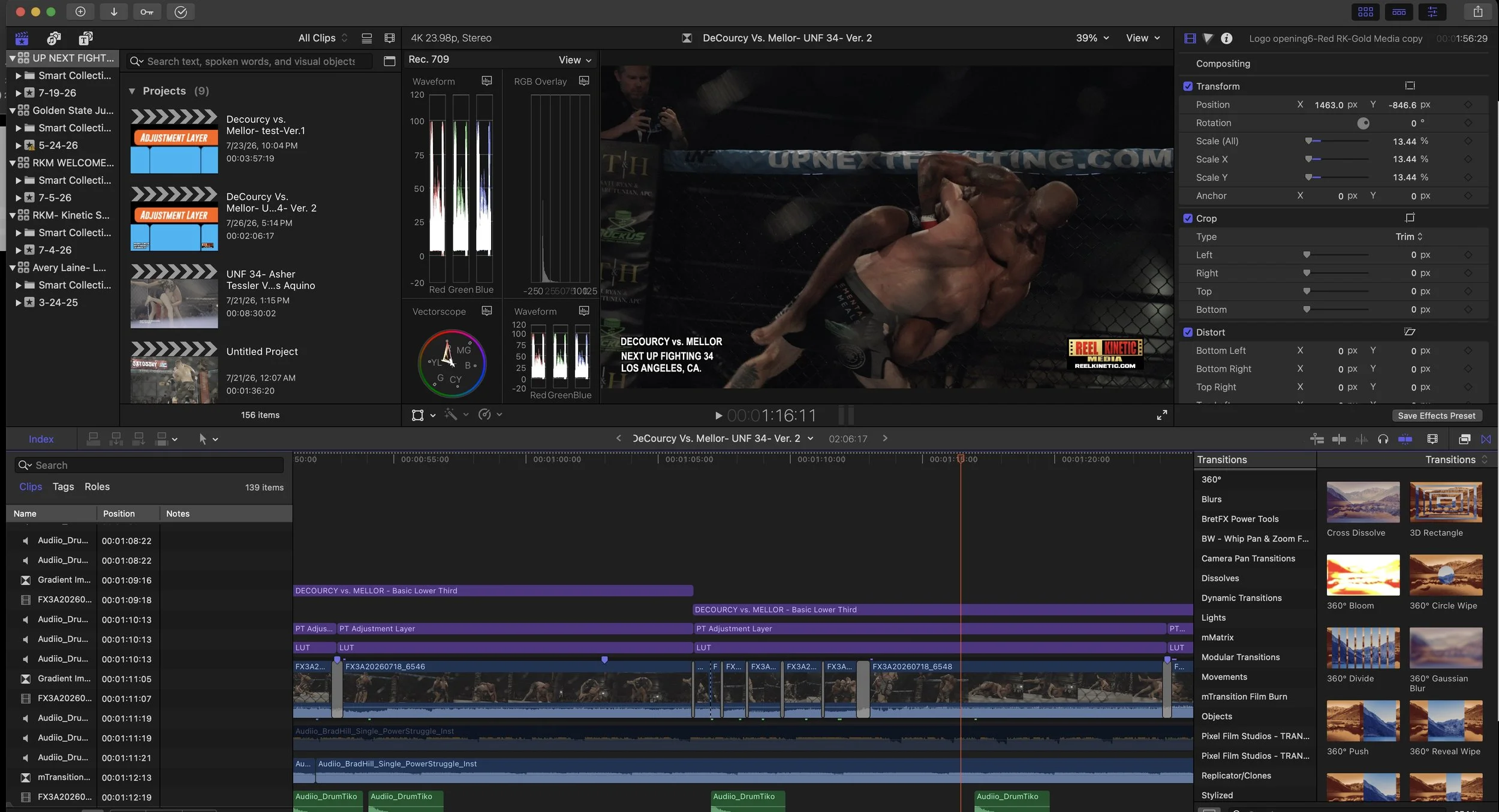
From the cage to the timeline. Using Final Cut Pro and DaVinci Resolve Studio, we shape the footage through pacing, sound, and color to create a cinematic experience—a perspective even those watching live don’t get to see.
Bringing Filmmaking Into Live Sports
On a traditional film set, you can shape the conditions around the camera. You can position lights, rehearse movement, and reset for another take.
In live sports, we have to work from the conditions we’re given.
We cannot move the sun, stop a competition, or ask an athlete to repeat something that happened in a fraction of a second. We have to find our position, anticipate the action, and adjust as it unfolds.
Our filmmaking experience guides those decisions. Where we place the camera affects how an audience understands the action. Movement can communicate speed or struggle. Holding on a face after the action ends can reveal what the result meant.
The challenge is recognizing those possibilities while there is still time to capture them.
That starts before the event. We learn about the athletes, talk with the client, study the venue, and make sure the crew understands what matters. A client may know about a recovery, a setback, or a personal milestone that changes how we see the competition.
Preparation gives us direction. Experience helps us respond when the story takes a turn we didn’t expect.
Tools That Let Us Stay Close
Compact digital cinema cameras and carefully chosen lenses help us work this way. They give us control over the image while allowing us to move through active venues with a smaller crew.
That matters beyond convenience. A production takes up space, and its presence affects people. An athlete preparing to compete needs room to concentrate. Someone speaking about a difficult experience needs room to feel comfortable.
Keeping our footprint small helps us respect the environment we’ve entered.
Digital production also lets us meet the pace of live sports. Sometimes a finished piece needs to be online within hours, while the event is still part of the conversation. We need a process that can move from filming into editing and delivery quickly.
That is why we work digitally. “Films” describes the craft and storytelling we bring to the process. It doesn’t mean we shoot on physical film.
The equipment helps us get there, but we still have to decide what deserves the audience’s attention—and what the finished piece is trying to say.
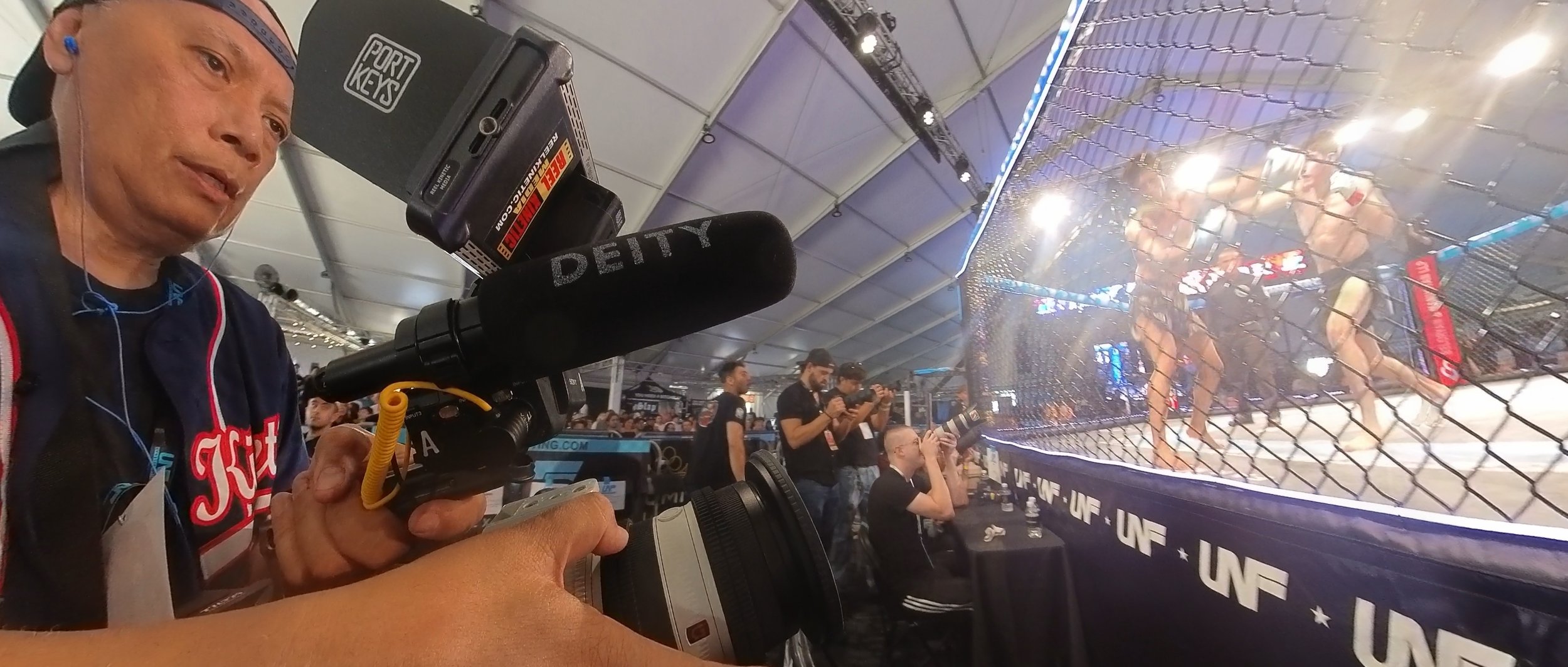
John Kreng, filmmaker and founder of Reel Kinetic Films, filming cageside at Up Next Fighting 34.
The Person Behind the Performance
My experience with interviews goes back to magazine work in the mid-1990s and continued through special features for films released on DVD and Blu-ray.
Over those years, speaking with filmmakers, actors, and other accomplished people taught me something that still guides our work: a meaningful conversation depends on whether the person feels they can trust you.
Preparation is part of earning that trust. So is listening closely enough to move beyond the next question on your list.
Sometimes a person mentions something briefly, almost as an aside, that helps you understand everything they’ve said before it. Sometimes they need a little silence to finish a thought. You have to give the conversation room.
That experience shapes how we approach athletes, too. Their performance may be the reason we’re there, but there is a person living through it. What did it take to reach this point? What are they still trying to figure out? What happens when the result doesn’t match the effort?
We don’t assume everyone wants to discuss those things. Our responsibility is to create a respectful environment and let people decide what they’re comfortable sharing.
When someone does speak openly, we owe that honesty care in the edit. Their words need context. Their uncertainty deserves the same respect as their confidence.
I’ve come to value those moments because they allow us to recognize something of ourselves in someone whose life may otherwise seem very different. We may never compete at their level, but we understand disappointment, persistence, doubt, and the desire to do something well.
That connection is a large part of why we make films.
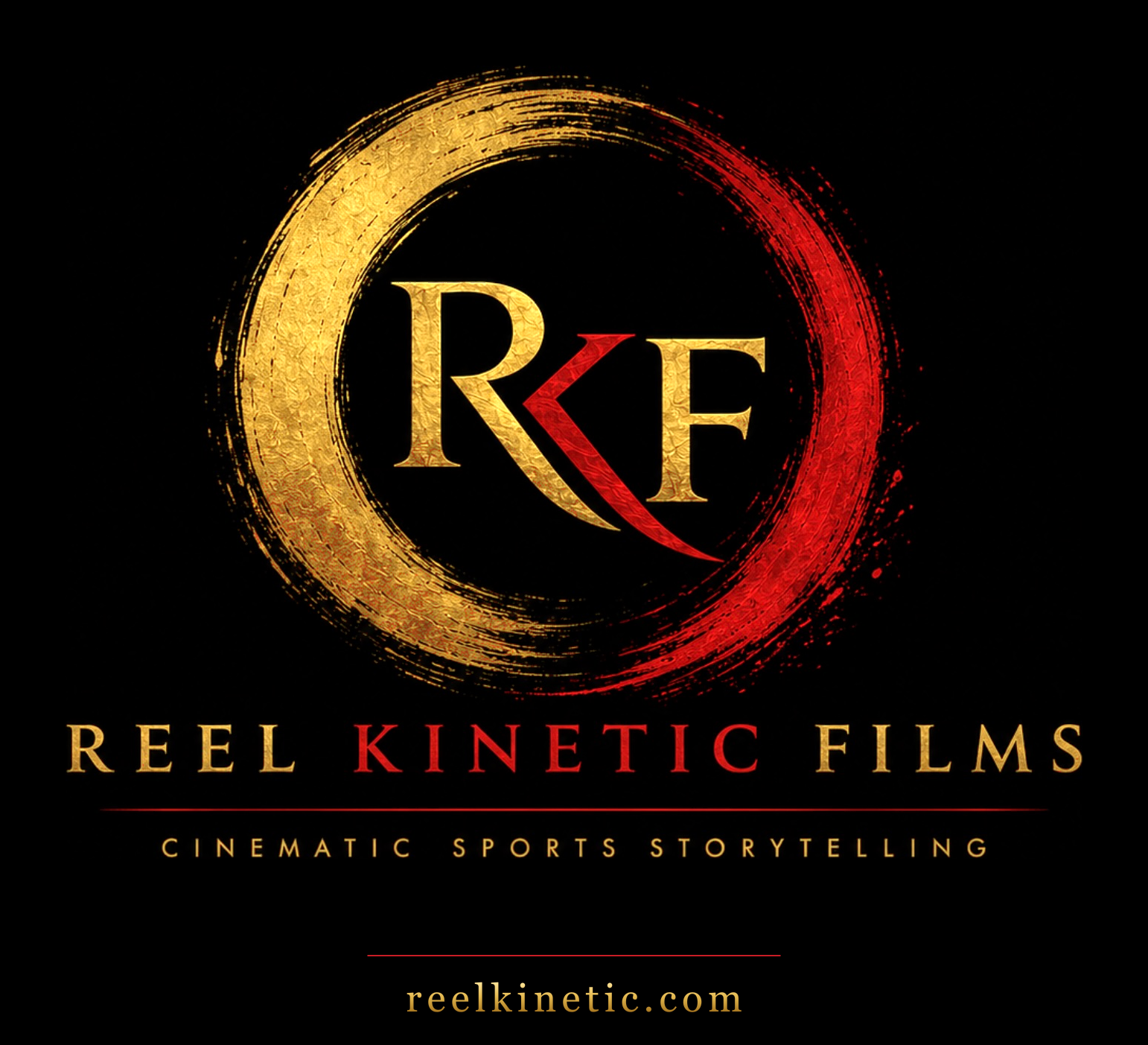
The Reel Kinetic Films mark—an imperfect circle reflecting the movement, energy, and humanity of the stories we tell.
What the Circle Means
The imperfect circle around the RKF initials carries some of that same thinking.
Its texture and uneven edges leave a sense of movement in the mark. For us, it also reflects the humanity we want to preserve in our stories.
People’s lives rarely follow a clean path. The struggles and contradictions can be essential to understanding who they are. We want to bring care and discipline to how we tell those stories without smoothing away everything that makes them personal.
Gold represents success. Red represents vitality. The circle brings those ideas together with the energy and openness we want to carry into our work.
What Changes With the Name
Much of this approach has been developing for years. Choosing “Films” means putting it at the center of how we describe ourselves and what clients can expect from us.
It means starting conversations with what the story needs to communicate. It means making room for the human experience alongside the action. And it means judging the finished work by whether it gives an audience something to understand and care about, as well as something compelling to watch.
We’ll still work quickly when the assignment requires it. We’ll still adapt to difficult conditions and collaborate closely with the people who bring us in. Those practical responsibilities are part of making the film.
The change is that we’re being clearer about the purpose behind them.
Reel Kinetic Media gave us room to find our direction. Reel Kinetic Films expresses the direction we want to keep pursuing: bringing our filmmaking experience into real situations and telling stories that stay with people after the moment has passed.