

FIELD NOTES #006: The $2,245 Question: Is This Cinema Camera Really a Bargain?
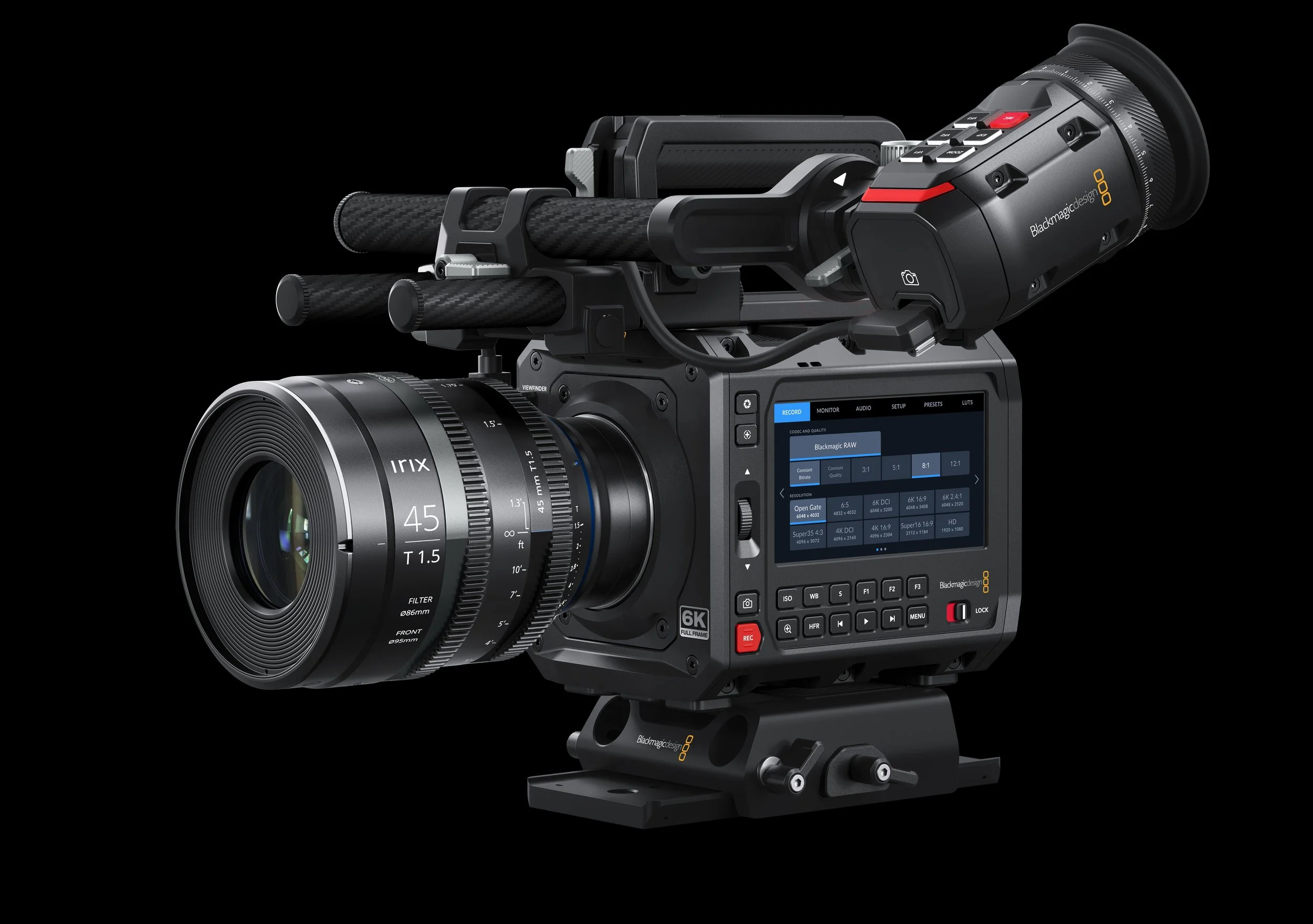
The Blackmagic PYXIS 6K. Now at $2,245, it’s easy to picture the possibilities. But what would it take to make it part of our kit?
When Blackmagic Design dropped the price of the PYXIS 6K to $2,245, I would be lying if I said it did not get my attention.
A full-frame 6K cinema camera with Blackmagic RAW and open-gate recording is tempting at that price. It’s the kind of offer that makes a filmmaker open another browser tab and begin mentally rearranging the camera bag.
But a price drop this large also makes me pause. Is a replacement coming, or is this simply a good time to buy?
Blackmagic says lower component costs allowed it to reduce prices and pass the savings on to customers. That explanation alone gives me no reason to assume a replacement is around the corner. Read the announcement reproduced here.
Meanwhile, Sony has raised prices on several Cinema Line cameras in Japan, including the FX3A and FX6, citing higher material, manufacturing, and shipping costs. Those increases are specific to that market, but they show why I can’t use price changes alone to predict what camera companies will do next. Read the report on Sony’s announcement.
That uncertainty is where the fear of missing out—FOMO—gets involved. Buy now, and I might wish I had waited. Wait, and I might worry that I missed a bargain.
Before reaching for my wallet, I need to ask a more useful question: what would this camera let me do that my current equipment cannot?
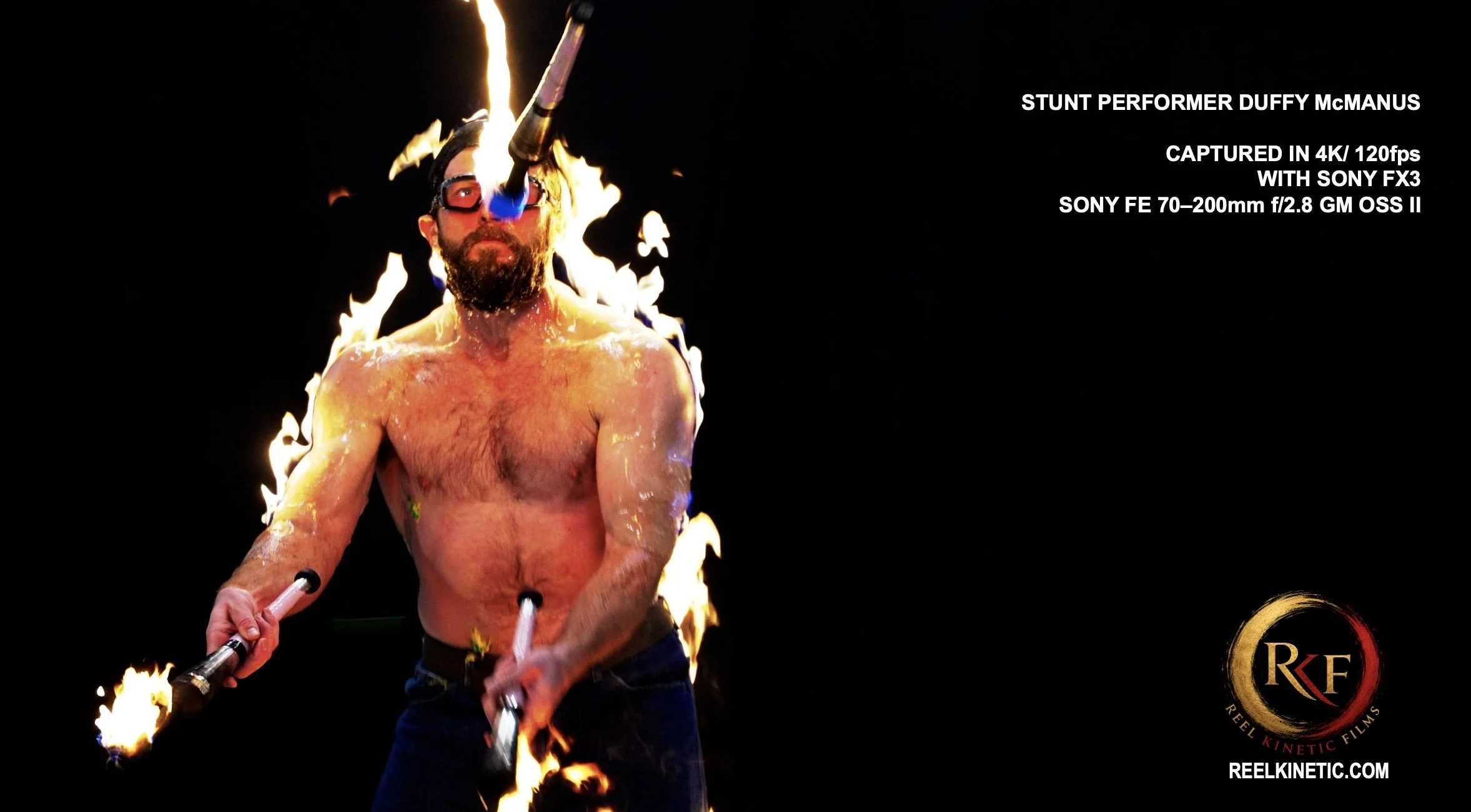
While on fire, stunt professional, Duffy McManus stands on a balance board and juggles flaming clubs—as someone off camera fires paintballs at him.
Capturing unpredictable action like this is exactly why high frame rates and dependable autofocus matter to my work.
Special thanks to the stunt design team at Action Factory for helping us safely bring this shot to life.
The Filmmaker and the Business Owner
I’m the founder of Reel Kinetic Films, a Los Angeles production company specializing in cinematic sports and action storytelling.
The filmmaker in me can immediately imagine what I might create with a new camera. The business owner has to ask whether the company actually needs it.
Those two voices don’t always agree.
I’ve built my working package around the Sony FX6, FX3, and lenses selected for the way I shoot. I know how that equipment behaves when the lighting changes, the action accelerates, and there’s no opportunity to start again.
A new camera needs to offer enough to justify adding it to that package.
A second system could make sense if it solved a production problem or opened the door to work I couldn’t otherwise take on. But I need to be honest about whether I’m responding to a real need or simply getting excited about something new.
That distinction becomes harder when the camera tempting me has so much to offer.
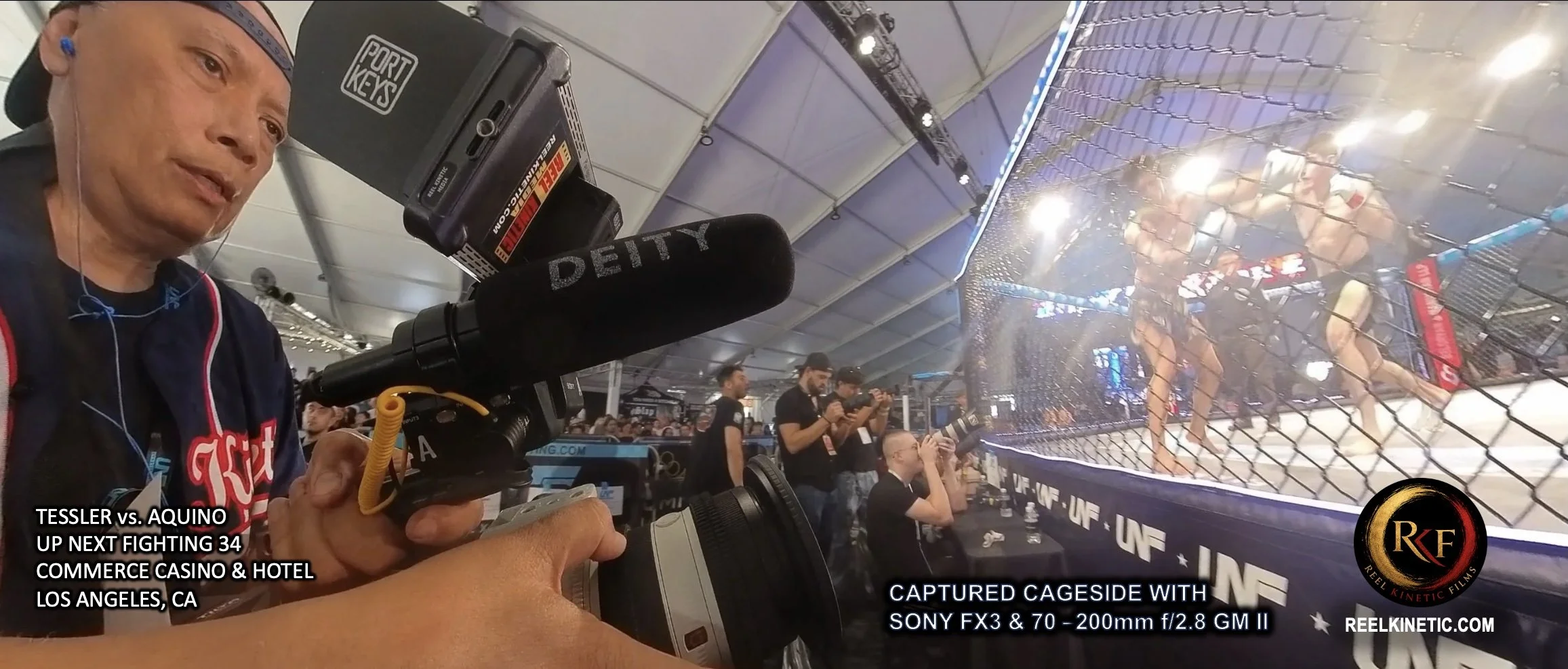
When the action moves this quickly, there are no second chances. This is where 4K/ 120 fps and dependable autofocus earn their place in my workflow.
What Does My Work Actually Require?
Live sports don’t give me second takes. When the moment happens, I need to follow the action, hold focus, and capture footage that gives me the choices I want in the edit.
Two things matter enormously in my work: dependable autofocus and 4K recording at 120 frames per second.
My FX6 and FX3 already give me both. High frame rates let me slow down a movement and reveal details that pass too quickly to appreciate at normal speed. That has become an important part of how I film sports and action.
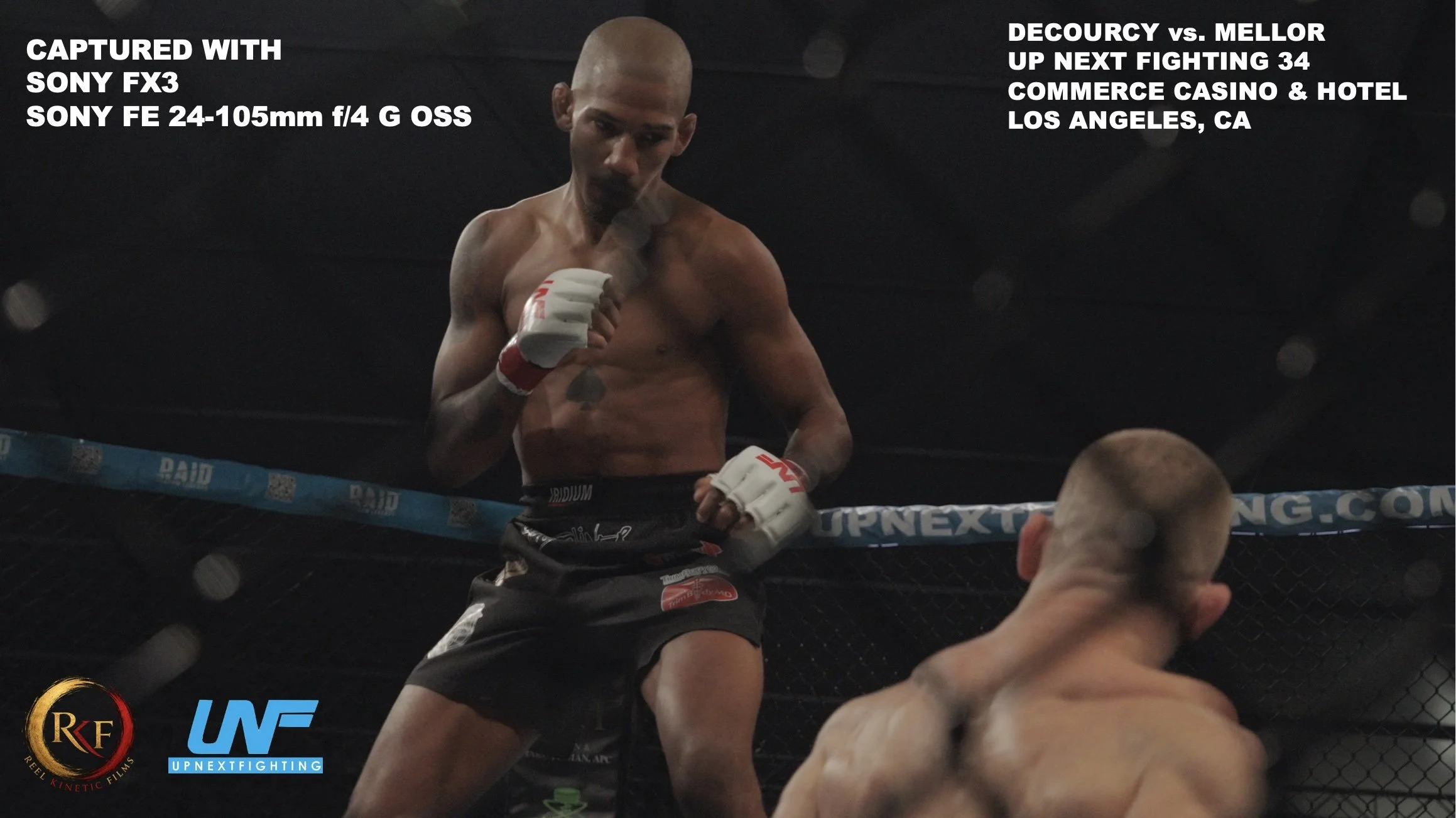
THE BEST CAMERA DEAL CAN STILL BE AN EXPENSIVE DECISION.
My FX3 already gives me 4K/120p and dependable autofocus, while the 24–105mm gives me the flexibility to follow action as it changes. Together, they have proven themselves when the moment cannot be repeated.
That is the limitation no price drop can erase: the PYXIS cannot give me 4K/120p—the recording capability I used to capture this moment and one that has become essential to my sports and action work.
The PYXIS 6K offers several recording options, but it doesn’t record 4K at 120 fps. Blackmagic lists 4K DCI recording up to 60 fps, with 120 fps available at 1080 HD. For someone delivering in HD, that may be enough. For my work, the difference matters. Blackmagic PYXIS technical specifications.
Autofocus deserves a fair explanation, too. It would be inaccurate to dismiss the PYXIS as a camera without autofocus. Blackmagic now supports continuous autofocus and tracking on the 6K L-mount model with compatible lenses.
My reason for staying with Sony is based on experience. I already know how my cameras and lenses respond in the conditions I regularly face. That familiarity helps me concentrate on the action instead of wondering how the equipment will behave.
A camera that works beautifully for interviews, narrative productions, or a crew with a focus puller may serve different needs from mine. My buying decision has to begin with the jobs I actually do.
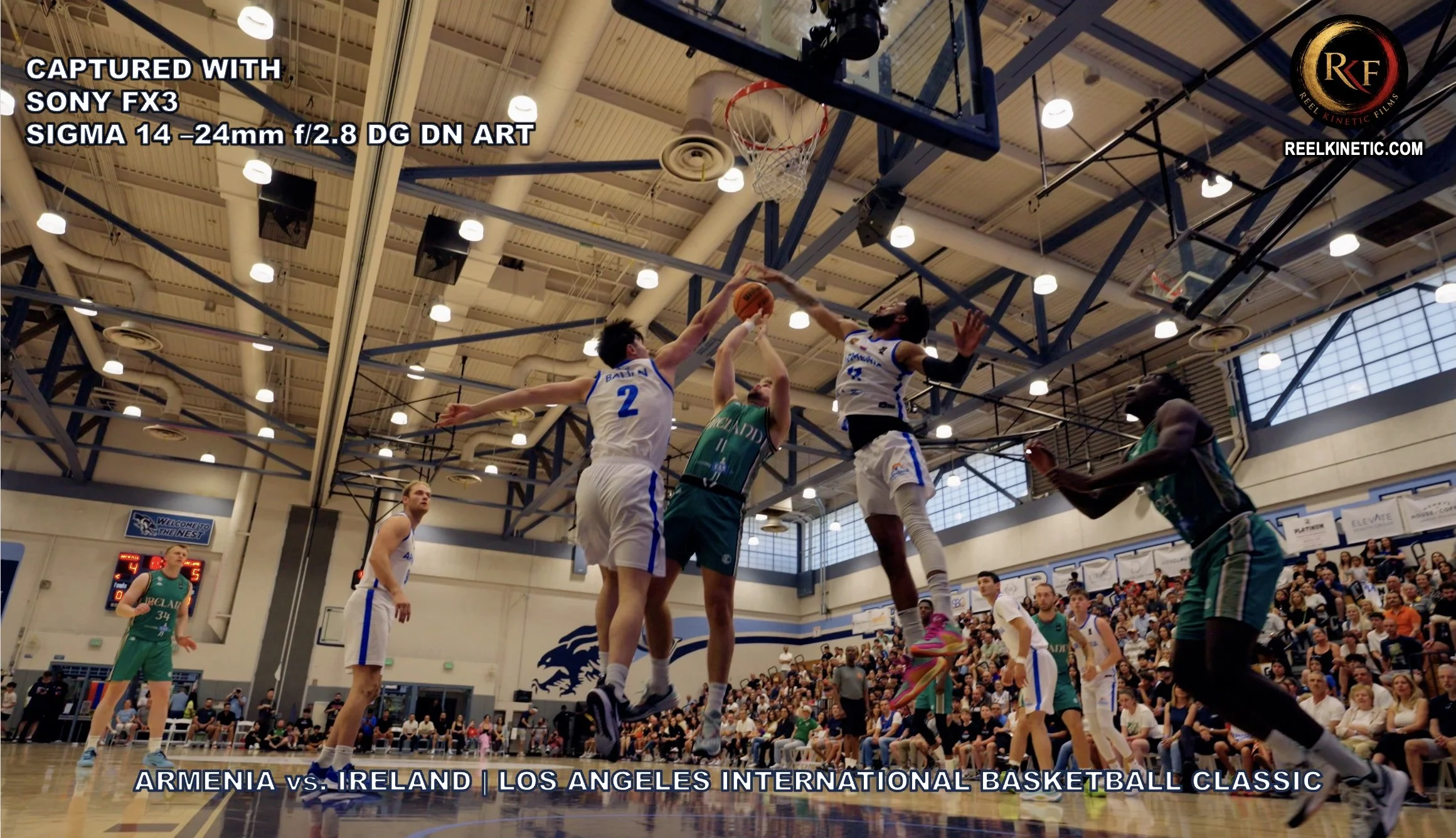
A WIDE LENS DOESN’T JUST SHOW MORE. IT PUTS THE AUDIENCE INSIDE THE PLAY.
From beneath the basket, the 14-24mm emphasizes height and reach while keeping the rim, players and crowd within the frame.
A camera-system decision is about more than the camera body.
The $2,245 Camera That Costs More Than $2,245
The body price is only the beginning.
My current package is built around Sony E-mount lenses and CFexpress Type A media. Adding an L-mount PYXIS would mean budgeting for compatible lenses and recording media, since it uses CFexpress Type B cards or external USB-C storage.
I would also need to work out what I could reuse and what I would have to add: power, filters, camera support, and any changes to editing or storage.
Some equipment might transfer between systems. Other purchases would be specific to the new camera. Either way, I need to price the setup I would actually take to a job.
Suddenly, the $2,245 camera becomes a larger investment.
That doesn’t make the PYXIS poor value. It means the cost is different for someone starting from scratch and someone who already owns a working production package.
There’s also time involved. Learning a camera, testing it with lenses, checking recording modes, and making sure the footage fits the editing process are all part of bringing new equipment into the company.
I want to do that work before a client is depending on it.
The bargain has to make sense after those costs are included.
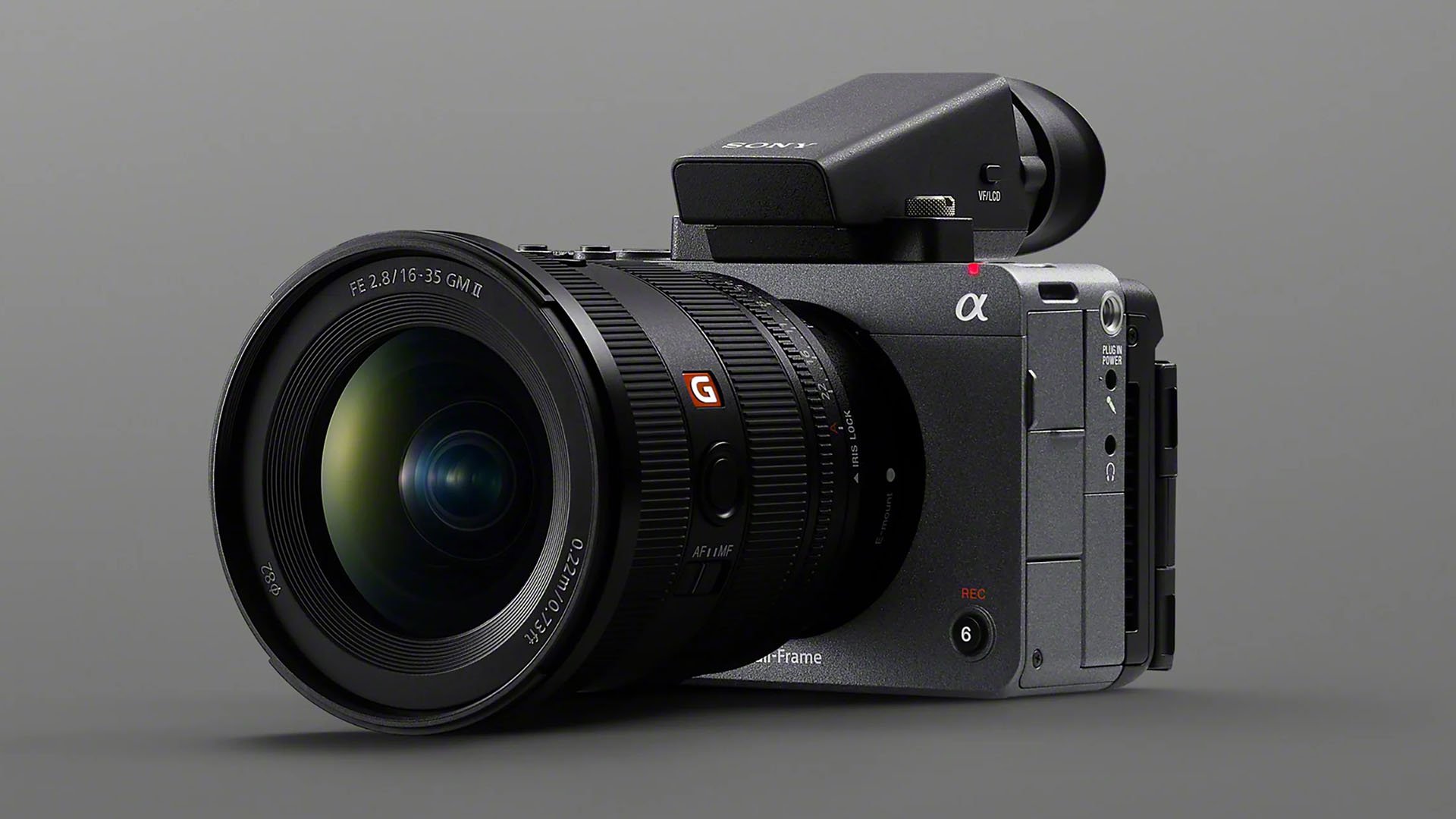
The Sony FX5 has my attention. Whether it earns a place in my kit depends on what it brings to the work.
Then There Is the FX5
Staying with Sony doesn’t mean automatically buying every new Sony camera.
The FX5 has my attention. Sony lists 5K recording up to 60 fps, 4K up to 120 fps, Full HD up to 240 fps, internal X-OCN RAW, and open-gate recording among its capabilities. There are useful possibilities there, but my FX6 and FX3 already cover the 4K at 120 fps that I regularly use.
I also have a practical concern about the accessories. Sony says the optional OLED viewfinder and XLR-H2 handle cannot be used together. The handle provides the XLR inputs and supports 32-bit float audio recording, so that limitation affects how I would set up the camera for work.
What interests me most is the planned addition of 5K at 120 fps and 4K at 240 fps through firmware version 2.0. Sony lists that update for August 2027 or later.
That could give me new ways to photograph movement. But before buying for those features, I want to know how they perform in real shooting conditions. What compromises come with the faster recording modes? How well will they fit the way I shoot and edit?
An announced feature gives me something to watch. A working feature gives me something I can test.
I could buy now and trust that the update will meet my needs. Or I could wait until I can judge the results. Waiting might mean a different price, but guessing about future pricing isn’t a strong reason to buy equipment I don’t currently need.
That is the FOMO trap: the fear of buying too early colliding with the fear of waiting too long.
For now, the FX5 stays on my watchlist.

A price drop can make me look at another camera. Moments like this remind me why I trust the one already in my hands.
Making the Decision
I’m keeping my FX6 and FX3 package because it already provides the frame rates, autofocus, lenses, and familiarity my work requires.
The PYXIS made me stop and think. That was useful. Looking closely at another camera forced me to consider what I value in my current setup and what would make a change worthwhile.
A lower price is a reason to look. A clear benefit to the work is a reason to buy.
The PYXIS could make sense for a different project or a different stage of the company. The FX5 may earn a place in my kit once I can test the features that interest me. I’m open to both possibilities.
Today, though, I have equipment that lets me deliver. The images throughout this article are examples of what I’m already doing with it—from fast action to the quieter human moments that give a sports story meaning.
That is where I want my attention to stay.
FOMO may have excellent taste in cameras, but thankfully, it doesn’t work in the purchasing department at Reel Kinetic Films.
What would a new camera have to do to earn a place in your kit?